

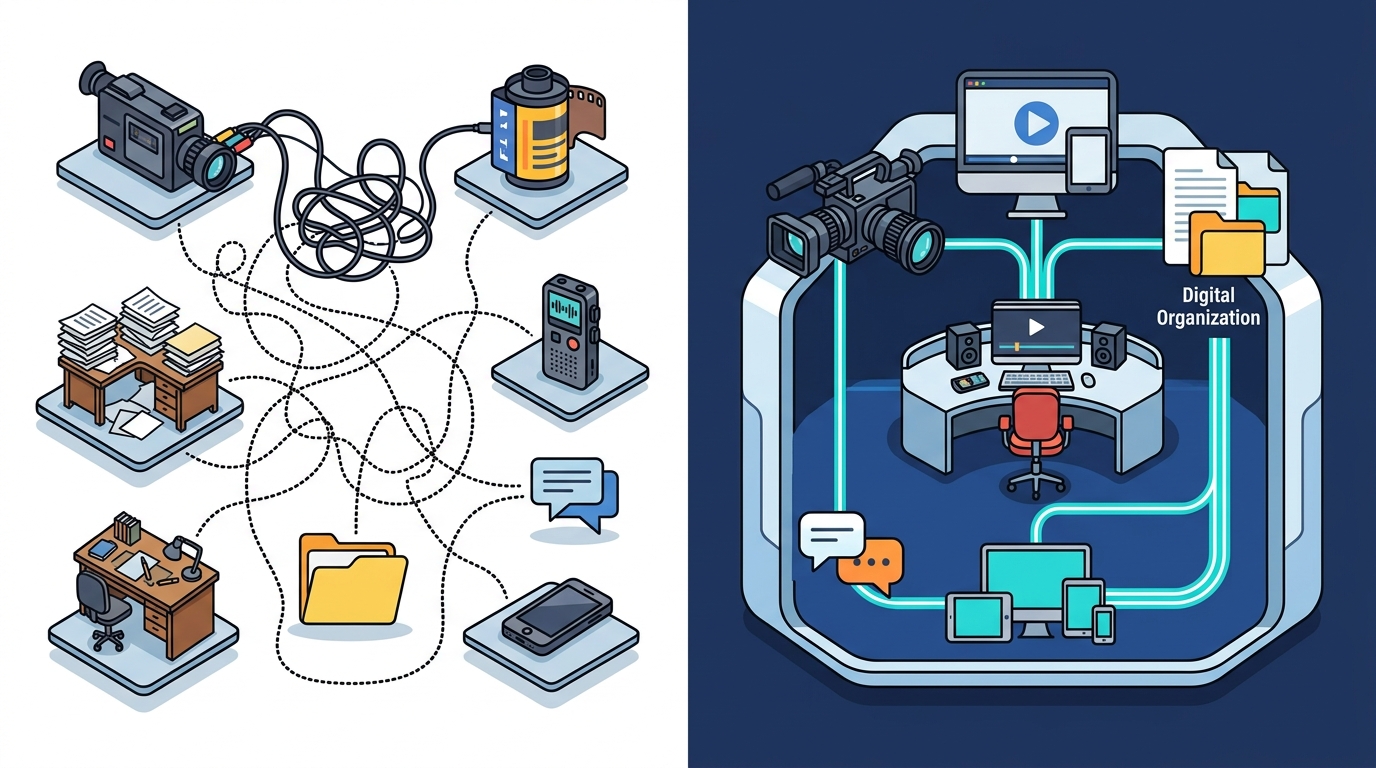
Fragmented software stacks create operational drag for media teams. An all-in-one media workspace is a unified digital environment that consolidates communication, project management, content review, and publishing into a single interface. This consolidation reduces context switching and eliminates data silos. By centralizing operations, teams can move from idea to execution faster. FridayHQ builds this type of platform specifically for the unique demands of modern media production.
The Cost of Context Switching
Media professionals often lose significant time navigating between disconnected applications. A producer might check a chat app for feedback, switch to a project management tool for status updates, and then open a separate file storage service to download the latest video cut. This constant shifting breaks cognitive flow. Each switch requires the brain to reorient to a new interface and set of rules. The result is slower decision-making and increased fatigue. When tools are separate, the work is fragmented. When tools are unified, the work stays connected.
Connecting Feedback to the Actual Work
In traditional setups, feedback often lives in email threads or chat logs, detached from the creative asset itself. This separation causes confusion about which version of a file a comment refers to. A unified workspace allows comments to be anchored directly to specific frames or regions of a video or image. This precision ensures that editors and designers understand exactly what needs changing. The conversation stays attached to the content it affects. This linkage removes ambiguity and accelerates the approval process. It turns vague notes into actionable instructions.
Streamlining the Approval and Publishing Pipeline
Getting content approved and published is a multi-step process that often involves manual handoffs. In a fragmented stack, a team might approve a video in one tool, then manually upload it to a social media scheduler in another. This manual transfer introduces risk and delays. An integrated platform allows teams to publish or schedule content directly from the workspace where it was reviewed. The approved version is the one that goes live. This direct pipeline reduces the chance of publishing the wrong file. It also provides a clear audit trail of who approved what and when. The transition from review to release becomes seamless.
Centralizing Knowledge and Operational Context
Media projects rely on specific brand guidelines, regional requirements, and historical context. When this knowledge is scattered across different documents and tools, new team members struggle to find it. A unified workspace can house project knowledge alongside the active work. Briefs, brand rules, and past decisions remain close to the content they govern. This proximity helps teams make consistent decisions without searching through archives. It also allows AI assistants to draw on this context to provide more relevant help. The system understands the work because the work is in one place.
Reducing Subscription Overhead
Managing multiple software subscriptions adds financial and administrative burden. Each tool requires its own billing, login, and support channel. For a team of ten, the cost of separate chat, project management, review, and storage tools can add up quickly. A consolidated platform simplifies budgeting and vendor management. It reduces the number of contracts to track. It also lowers the training overhead for new hires, who only need to learn one system. This efficiency allows teams to allocate resources toward creative work rather than software administration.
Key Takeaways
- Unified workspaces reduce context switching by keeping communication and content together.
- Directly linking feedback to media assets eliminates ambiguity in the review process.
- Integrated publishing pipelines prevent errors by ensuring the approved version goes live.
- Centralizing project knowledge improves consistency and onboarding for new team members.
- Consolidating tools lowers subscription costs and simplifies vendor management.
- A single platform provides a clearer audit trail for approvals and operational decisions.
Frequently Asked Questions
What is an all-in-one media workspace?
An all-in-one media workspace is a software platform that combines chat, project management, content review, storage, and publishing in a single interface.
How does a unified workspace improve collaboration?
It improves collaboration by keeping conversations, files, and tasks connected, so team members do not need to switch between different applications to find information.
Can I publish social media posts directly from a unified workspace?
Yes, many unified platforms allow you to schedule and publish content to connected social accounts directly from the workspace where the content was approved.
Does using one tool replace the need for specialized software?
It replaces the need for separate operational tools like chat and project management, but specialized creative software for editing or design is still required.
How does a unified workspace handle file storage?
It typically includes integrated cloud storage that keeps media assets close to the projects and conversations they belong to, ensuring fast access and version control.
Conclusion
Fragmented tools create friction that slows down creative work. An all-in-one media workspace removes this friction by connecting people, projects, and content in a single place. This integration allows teams to focus on creating rather than managing. FridayHQ provides this unified environment, helping media teams move from idea to execution with clarity and speed. Explore the platform to see how a connected workspace can transform your operations.