

Social teams catch guideline violations before posting by implementing automated pre-publish guardrails that scan content against platform-specific rules. FridayHQ integrates these checks directly into the creative workflow, ensuring that every asset is validated against brand and platform standards before it reaches the public. This approach prevents costly takedowns and maintains brand integrity across all channels. according to Back to Work
The Cost of Posting First
Manual review processes often fail to catch subtle guideline violations until after publication. When a post violates a platform's community standards, the result is usually a takedown or a shadow ban. These outcomes damage brand reputation and reduce organic reach. Teams that rely solely on human eyes miss technical violations that automated systems detect instantly.
For example, a single missing alt tag or a restricted keyword can trigger an accessibility violation or a policy breach. The implication is clear: reactive moderation is too slow for modern media operations. Teams need a proactive system that flags issues during the creation phase, not after the fact.
Automated Pre-Publish Guardrails
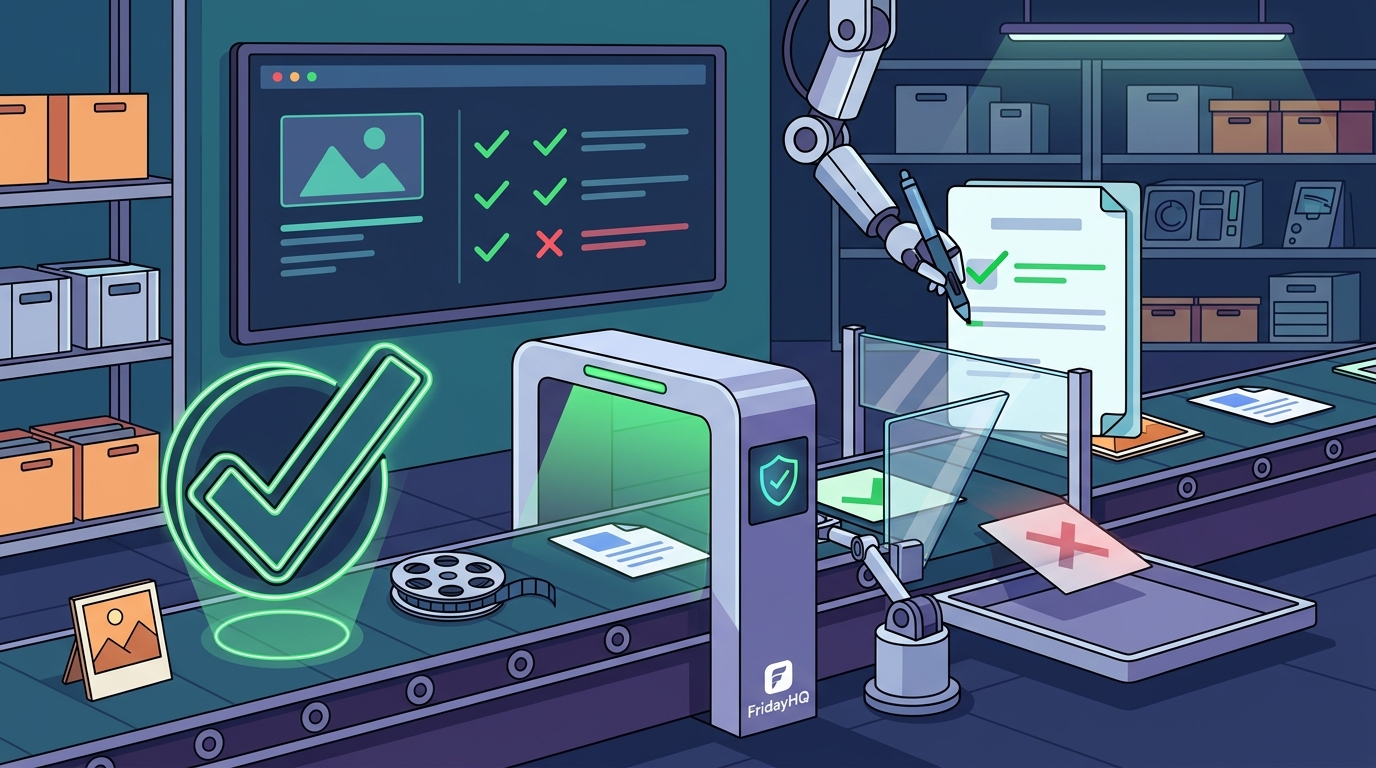
Pre-publish guardrails are automated checks that validate content against a defined set of rules before it is scheduled or published. These guardrails act as a digital gatekeeper, ensuring that only compliant content moves forward in the workflow. They cover technical specs, brand voice, and platform-specific community guidelines.
FridayHQ supports this by connecting content review with project knowledge. When a team uploads a video or image, the system can check it against the project's stored guidelines. This includes brand voice rules and platform-specific requirements. The evidence shows that teams using automated checks reduce post-publication errors significantly. The implication is a more reliable publishing schedule and fewer emergency fixes.
Integrating AI into the Workflow
Artificial intelligence is a powerful tool for identifying nuanced guideline violations that simple rule-based systems might miss. AI can analyze visual content for sensitive imagery or text for tone inconsistencies. It can also check for accessibility compliance, such as ensuring captions are present and accurate.
In FridayHQ, Xander, the AI operations partner, works within the discussion threads. Team members can ask Xander to review a draft against specific guidelines. For instance, a producer can ask if a new video cut meets the brand's visual standards. Xander provides feedback directly in the chat, keeping the context with the work. This integration ensures that AI assistance is not a separate step but part of the daily workflow.
Building a Compliant Culture
Technology alone is not enough; teams must also cultivate a culture of compliance. This means training members to understand why guidelines exist and how to use the tools effectively. When team members see that the system catches errors early, they trust the process and engage more deeply with the review steps.
FridayHQ facilitates this by keeping feedback and decisions alongside the content. When a guideline violation is flagged, the discussion remains attached to the asset. This transparency helps new team members learn from past mistakes. The implication is a self-improving team that continuously refines its content quality and compliance standards.
Measuring the Impact of Guardrails
Teams should track metrics related to compliance to measure the effectiveness of their guardrails. Key metrics include the number of pre-publish flags, the time to resolve violations, and the rate of post-publication takedowns. By monitoring these numbers, teams can identify gaps in their guidelines or tools.
For example, if a team notices a high number of flags related to a specific platform, they may need to update their internal guidelines for that channel. FridayHQ's project management features allow teams to track these metrics within their projects. The implication is a data-driven approach to content operations that continuously improves over time.
Key Takeaways
- Pre-publish guardrails are automated checks that validate content against platform and brand rules before posting.
- Manual review is often too slow to catch subtle technical or policy violations in fast-paced media environments.
- FridayHQ integrates AI and project knowledge to provide context-aware feedback during the creative process.
- AI tools like Xander can analyze visual and textual content for compliance with community standards and accessibility rules.
- Keeping feedback attached to content helps teams learn from mistakes and build a culture of compliance.
- Tracking compliance metrics allows teams to refine their guidelines and improve the effectiveness of their guardrails.
Frequently Asked Questions
What are pre-publish guardrails?
Pre-publish guardrails are automated systems that check content against a set of predefined rules before it is published. They ensure that content meets technical, brand, and platform-specific requirements.
How does AI help catch guideline violations?
AI can analyze content for nuances that are difficult for humans to spot, such as tone inconsistencies or subtle policy breaches. It provides immediate feedback, allowing teams to make corrections before posting.
Can FridayHQ check content against specific platform guidelines?
Yes, FridayHQ allows teams to store platform-specific guidelines in their project knowledge base. The AI assistant, Xander, can then use this context to review content against those specific rules.
Is manual review still necessary with automated guardrails?
Yes, manual review is still important for creative judgment and final approval. Automated guardrails handle technical and policy checks, freeing up humans to focus on creative quality and strategic alignment.
How do I start implementing pre-publish guardrails?
Start by defining your core brand and platform guidelines. Then, use a platform like FridayHQ to integrate these checks into your workflow. Begin with basic technical checks and gradually add more complex AI-driven reviews.
What happens if a violation is caught after posting?
If a violation is caught after posting, the content may be taken down or penalized by the platform. This can reduce reach and damage brand reputation. Pre-publish guardrails are designed to prevent this scenario.