

Integrating AI into Media Content Workflows for Brand Consistency
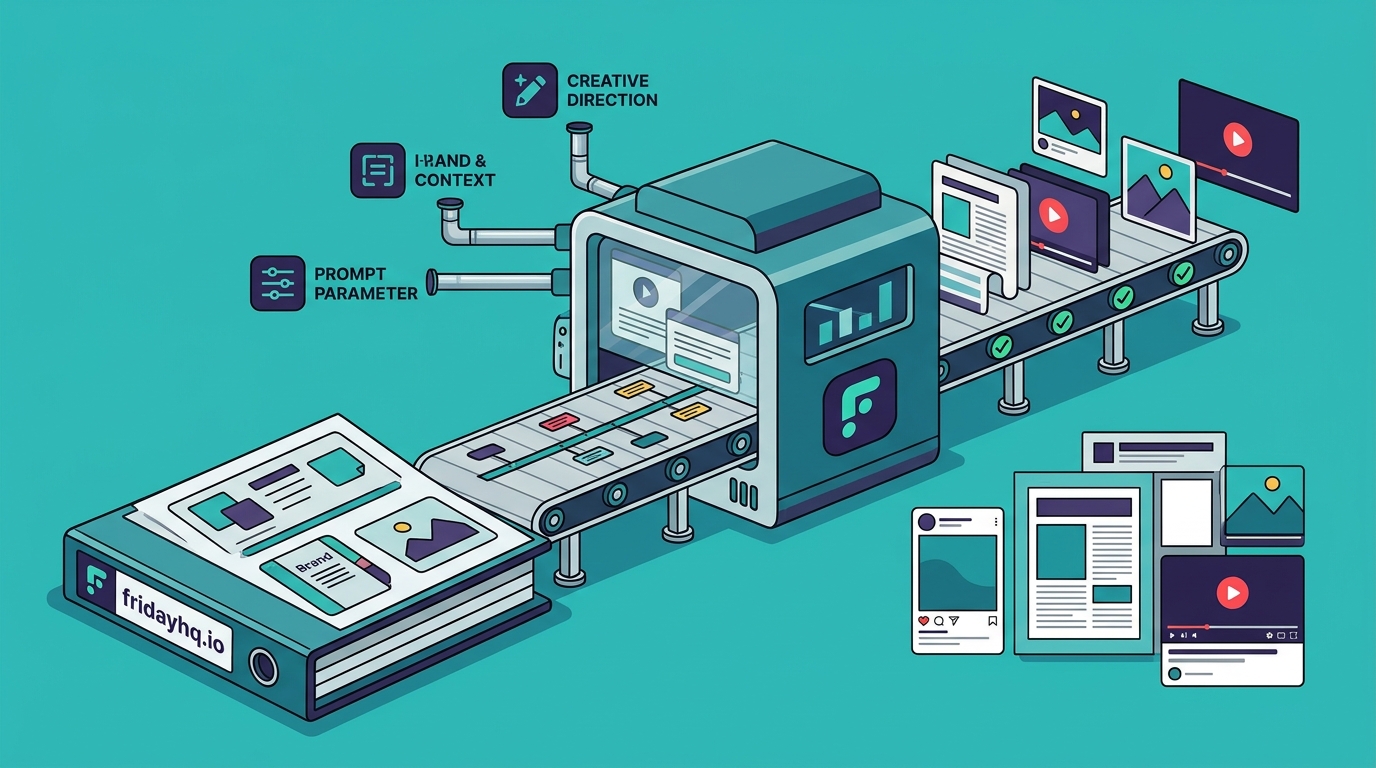
Media teams should integrate AI into their content creation process by treating it as an operational partner that works directly from their internal project knowledge and brand guidelines. This approach ensures that generated content aligns with established visual and tonal standards. By embedding AI within a unified workspace, teams can maintain strict brand consistency while accelerating production cycles. This method reduces the friction between creative ideation and final execution.
The Operational Gap in Creative AI
Many media organizations struggle to keep AI outputs aligned with their brand identity. The core issue is that generic AI tools lack context about a specific company's history, voice, and visual standards. Brand consistency is the uniform application of visual, verbal, and tonal elements across all media assets. When AI operates in a vacuum, it produces generic content that requires extensive manual correction. This creates a bottleneck that negates the speed benefits of automation. Teams often find themselves spending more time fixing AI errors than they would have spent creating the content from scratch.
The solution lies in connecting AI to the actual work environment. When an AI assistant has access to project briefs, past approvals, and brand documents, it can generate content that is immediately relevant. This shifts the role of the AI from a simple text generator to a strategic collaborator. It understands the specific constraints of the project at hand. This context-aware approach is critical for maintaining the integrity of the brand in high-volume production environments.
Embedding Brand Knowledge into the Workflow
To maintain consistency, teams must feed their brand guidelines directly into their AI tools. Project knowledge is the collection of briefs, regional requirements, and platform-specific guidelines that define how content should be created. By centralizing this information, teams ensure that every AI interaction is grounded in factual brand data. For example, a media company might store its specific color palette, font choices, and tone of voice in a shared knowledge base. The AI can then reference these assets when suggesting captions or reviewing visual layouts. This prevents the drift that occurs when brand rules are scattered across different documents or team members' memories.
FridayHQ addresses this challenge by integrating an AI operations partner named Xander into its platform. Xander works with the content, project knowledge, and discussions already present in the workspace. It does not rely on external, generic prompts. Instead, it analyzes the specific context of the project. This allows it to provide feedback that is tailored to the brand's unique identity. The result is a more reliable creative process where the AI acts as a guardian of brand standards rather than a source of inconsistency.
Reviewing AI Output Against Brand Standards
Integration is not just about generation; it is about rigorous review. Teams need a clear process for checking AI-generated content against brand guidelines. Content review is the systematic evaluation of creative assets to ensure they meet quality and brand standards before publication. In a traditional workflow, this step often involves emailing files back and forth, leading to version control issues. In a unified workspace, feedback is attached directly to the specific frame or text element. This precision ensures that reviewers and creators are looking at the exact same thing. It eliminates the ambiguity that often leads to brand inconsistencies.
When using AI in this context, the review process becomes more efficient. The AI can check whether a new version addresses earlier feedback. It can verify if the tone matches the brand voice. This automated pre-check saves human reviewers time. They can focus on high-level strategic decisions rather than nitpicking minor errors. This division of labor allows teams to scale their output without sacrificing quality. It creates a feedback loop where the AI learns from human corrections over time.
Coordinating Tasks and Ownership
Brand consistency also depends on clear ownership of tasks. When multiple people are involved in creating and reviewing content, confusion can arise. Task ownership is the clear assignment of responsibility for specific steps in the content creation process. Without clear ownership, brand guidelines may be ignored or applied inconsistently. A unified platform helps by linking tasks directly to the content they affect. This ensures that the person responsible for a specific asset is aware of the brand requirements. It also provides a clear audit trail for compliance.
By coordinating tasks within the same workspace as the content, teams can maintain a single source of truth. The AI can help organize remaining changes and suggest next steps based on the project context. This reduces the administrative burden on team members. They can spend more time on creative work and less time on coordination. This operational efficiency is key to sustaining brand consistency over the long term. It ensures that the brand remains coherent even as the team scales or changes.
The Role of Storage and Delivery
Consistent brand delivery requires reliable access to assets. Teams need to ensure that the latest versions of brand assets are available to everyone. Global CDN delivery is a network of servers that distributes content quickly to users around the world. When brand assets are stored in a centralized, globally accessible location, teams can work efficiently. This is especially important for distributed teams or those working with international clients. It ensures that everyone is using the most up-to-date brand materials. It prevents the use of outdated logos or fonts that can harm brand perception.
FridayHQ provides fast and reliable storage with a global CDN. This ensures that creative assets are delivered quickly to teams wherever they are located. This reliability is essential for maintaining brand consistency in a global context. It allows teams to collaborate seamlessly across different time zones and regions. The result is a more cohesive brand presence across all markets. This technical foundation supports the creative and operational processes described earlier.
Key Takeaways
- Integrate AI into a unified workspace that has access to project knowledge and brand guidelines.
- Use AI to check content against brand standards before human review.
- Attach feedback directly to specific content elements to ensure precision.
- Assign clear task ownership to maintain accountability for brand consistency.
- Store brand assets in a centralized, globally accessible location.
- Use AI to organize tasks and suggest next steps based on project context.
Frequently Asked Questions
How does AI help maintain brand consistency?
AI helps maintain brand consistency by working from internal project knowledge and brand guidelines. It checks content against these standards and provides feedback that is tailored to the brand's unique identity.
What is the role of project knowledge in AI integration?
Project knowledge provides the context that AI needs to generate relevant content. It includes briefs, regional requirements, and platform-specific guidelines that define how content should be created.
Can AI replace human review in content creation?
No, AI should not replace human review. It should assist human reviewers by pre-checking content against brand standards and organizing tasks. Human reviewers make the final strategic decisions.
How does a unified workspace improve brand consistency?
A unified workspace keeps content, feedback, and approvals together. This ensures that everyone is working from the same source of truth and that brand guidelines are applied consistently.
What is the benefit of global CDN delivery for brand assets?
Global CDN delivery ensures that brand assets are accessible quickly to teams around the world. This prevents the use of outdated materials and supports consistent brand delivery across different regions.
Conclusion
Integrating AI into media content workflows requires a strategic approach that prioritizes brand consistency. By embedding AI within a unified workspace that has access to project knowledge and brand guidelines, teams can maintain their brand identity while accelerating production. This approach ensures that AI acts as a partner in the creative process, not just a tool for generation. It allows teams to scale their output without sacrificing quality. For media teams looking to streamline their operations, adopting this method is essential. FridayHQ provides the platform and AI partner needed to achieve this level of consistency and efficiency.