

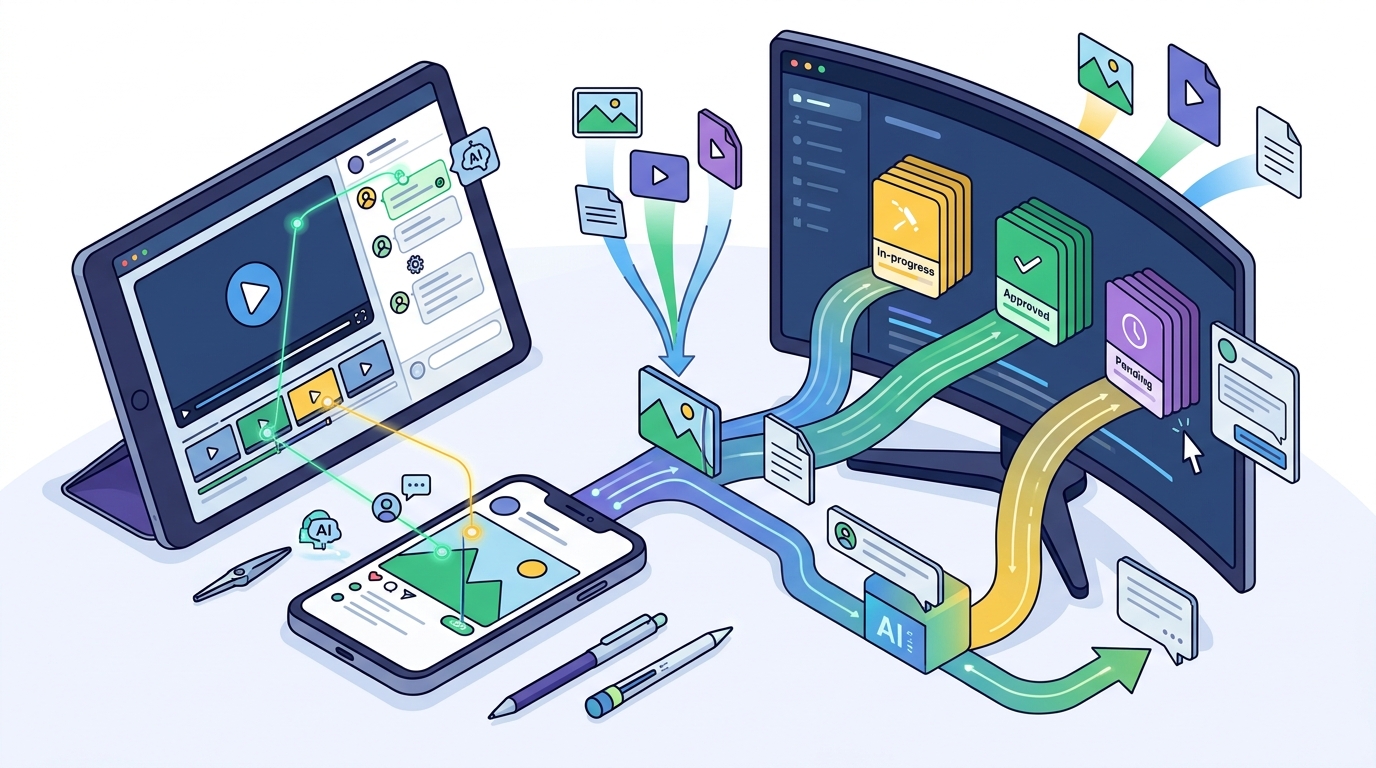
Streamlining client feedback on creative work with AI assistance requires a unified platform that connects communication, content, and approval states. By using an AI operations partner, media teams can reduce version confusion and ensure every comment is tied to the exact frame or file. This approach eliminates the scattered nature of traditional email and chat threads, allowing teams to move from review to final approval faster.
The Cost of Disconnected Feedback Loops
Traditional media operations often rely on a patchwork of tools that do not talk to each other. A brief might live in a document, while feedback sits in a chat application and the latest video version is stored in a cloud drive. This fragmentation creates a significant operational burden for producers and editors. They must constantly switch between applications to understand the context of a request. This leads to miscommunication and delayed project timelines.
When feedback is not attached to the specific content it references, teams face ambiguity. A comment about a transition in a video might be lost in a long chat history. Without a clear link between the note and the frame, editors must guess the intent. This lack of precision slows down the creative process. It also increases the risk of rework, as teams may address the wrong issue entirely.
FridayHQ addresses this by bringing the work and the context behind it together. The platform ensures that conversations stay close to the creative assets. This integration means that when a client leaves a note, the team knows exactly where to look. The result is a more efficient workflow that reduces the time spent chasing approvals.
AI as an Operations Partner for Review
Artificial intelligence in media operations is not just about generating content. It is about understanding the state of a project and guiding the next steps. An AI operations partner is a system that works with existing project knowledge, content, and discussions to help teams understand what is happening. It acts as a member of the conversation, providing insights that reduce manual management overhead.
In a review workflow, AI can help by checking whether a new version addresses earlier feedback. For example, a producer can ask the system if a specific change was made in the latest cut. The AI analyzes the content against previous notes to provide a clear answer. This capability allows teams to verify progress without manually scrubbing through every frame. It ensures that feedback is resolved before moving to the next stage.
Furthermore, AI can help coordinate tasks and handoffs. It can identify what is blocking the team and suggest the next action. By grounding its responses in the project context, the AI provides relevant and actionable advice. This shifts the role of the operations team from managing tools to running the company. They spend less time organizing files and more time on creative strategy.
Connecting Feedback to Specific Frames and Versions
Region annotations provide another layer of precision. Users can point to a specific area in a frame and explain what needs changing. This is particularly useful for image-based content or complex video compositions. By visually marking the area of concern, the feedback becomes self-explanatory. The client and the creative team share a clear visual reference.
Version control is also critical in this process. Teams must keep track of creative revisions and approval states for each platform. A single piece of content might need different versions for YouTube, Instagram, and TikTok. The platform must allow teams to see which version is approved for which channel. This clarity prevents the common mistake of publishing an outdated or unapproved asset.
Bringing Clients into the Review Process
Client access is a key component of streamlined feedback. Bringing stakeholders into the review process ensures that feedback stays with the work. Instead of sending files via email, clients can log in to a secure portal to view the latest versions. They can leave comments directly on the content. This keeps the conversation in one place, reducing the risk of lost information.
When clients are part of the workspace, the approval process becomes more transparent. They can see the status of each version. They know when a file is ready for review and when it has been approved. This transparency builds trust and reduces the back-and-forth that often slows down projects. It also ensures that the client is aligned with the team on the final output.
FridayHQ supports this by providing a unified workspace for both internal teams and external clients. The platform allows for controlled access, ensuring that clients can see what they need without accessing sensitive internal files. This balance of openness and security makes the review process smoother for everyone involved.
Key Takeaways
- Disconnected tools create operational friction by separating feedback from content.
- An AI operations partner helps verify that new versions address previous feedback.
- Frame-specific comments and region annotations provide the precision needed for effective review.
- Version control ensures that the correct asset is approved for each platform.
- Client access portals keep feedback tied to the work, reducing email chaos.
- Unified workspaces reduce the time spent managing tools and increase time for creative work.
Frequently Asked Questions
How does AI help with client feedback?
AI helps by analyzing content against previous feedback to verify if changes were made. It also helps coordinate tasks and identify blockers in the workflow.
What is a frame-specific comment?
A frame-specific comment is a note attached to a specific moment in a video or image. It ensures the editor knows exactly where to focus.
Can clients access the review platform?
Yes, clients can be given access to a secure portal where they can view versions and leave feedback directly on the content.
How does version control work in a unified platform?
Version control tracks creative revisions and approval states for each platform. It shows which version is ready and which still needs work.
Why is context important in media operations?
Context ensures that feedback is understood in relation to the project goals and previous decisions. It reduces miscommunication and rework.
Conclusion
Streamlining client feedback requires more than just a better chat tool. It demands a unified environment where content, communication, and AI intelligence work together. By adopting a platform that connects these elements, media teams can reduce operational overhead and improve the quality of their creative output. FridayHQ provides the infrastructure for this shift, offering a workspace designed specifically for the needs of modern media operations. To see how this works in practice, you can book a demo and explore the platform with your team. according to AI Will Shape