

AI enforces service level agreements (SLAs) by continuously monitoring task deadlines, flagging at-risk projects, and identifying ownership gaps before they cause delays. In media operations, where deadlines are strict and assets move through multiple review stages, this automated oversight prevents the silent bottlenecks that typically stall production. By integrating AI into the workflow, teams can shift from reactive firefighting to proactive management, ensuring that every deliverable meets its contractual or internal timeline without constant manual checking.
The Hidden Cost of Manual SLA Tracking
Traditional media teams often track service level agreements using static spreadsheets or disconnected project management tools. This approach creates a significant blind spot because the data is only as current as the last time a human updated it. When a producer forgets to mark a task as complete, the SLA tracker shows a green status while the project is actually stalled. This disconnect between perceived and actual progress is the primary driver of workflow bottlenecks in creative agencies.
Consider a video production team managing a client campaign with a strict 48-hour turnaround for final cuts. If the editor finishes the cut but fails to move the task to the "Review" stage, the project manager might not notice the delay until the client asks for an update. By this point, the SLA is already breached. The implication is clear: manual tracking is too slow for the pace of modern media. Teams need a system that observes the work in real-time, not just the status labels assigned by humans.
Real-Time Monitoring of Operational Health
AI systems can analyze the entire lifecycle of a media project to detect anomalies that indicate a bottleneck. Instead of waiting for a deadline to pass, the AI monitors the velocity of tasks across different stages, such as scripting, editing, and approval. If a specific stage consistently takes longer than the historical average, the system flags it as a potential risk. This allows the team to intervene while there is still time to recover the schedule.
For example, if an AI assistant notices that client approval stages are averaging three days instead of the expected one day, it can alert the project lead. The lead can then investigate whether the client is unresponsive or if the internal team is sending unclear feedback. This level of granular insight is impossible to achieve manually at scale. The result is a healthier operational pipeline where delays are identified as trends rather than surprises.
Automated Ownership and Handoff Verification
A major cause of SLA breaches is ambiguity in task ownership. In complex media workflows, a single asset might pass through five different people. If the handoff between two team members is not explicitly logged, the task can fall into a void where no one is responsible for the next step. AI helps enforce SLAs by verifying that every task has a clear owner and a defined next action before the previous stage is considered complete.
When a task is assigned, the AI can check if the assignee has the capacity to take it on. If the assignee is already overloaded with high-priority work, the system can suggest a rebalancing of the workload. This prevents the "bus factor" problem where a single person becomes a bottleneck because they are the only one who knows how to complete a specific type of task. By ensuring clear ownership and balanced workloads, AI reduces the friction that typically slows down creative production.
Integrating AI into the Creative Workflow
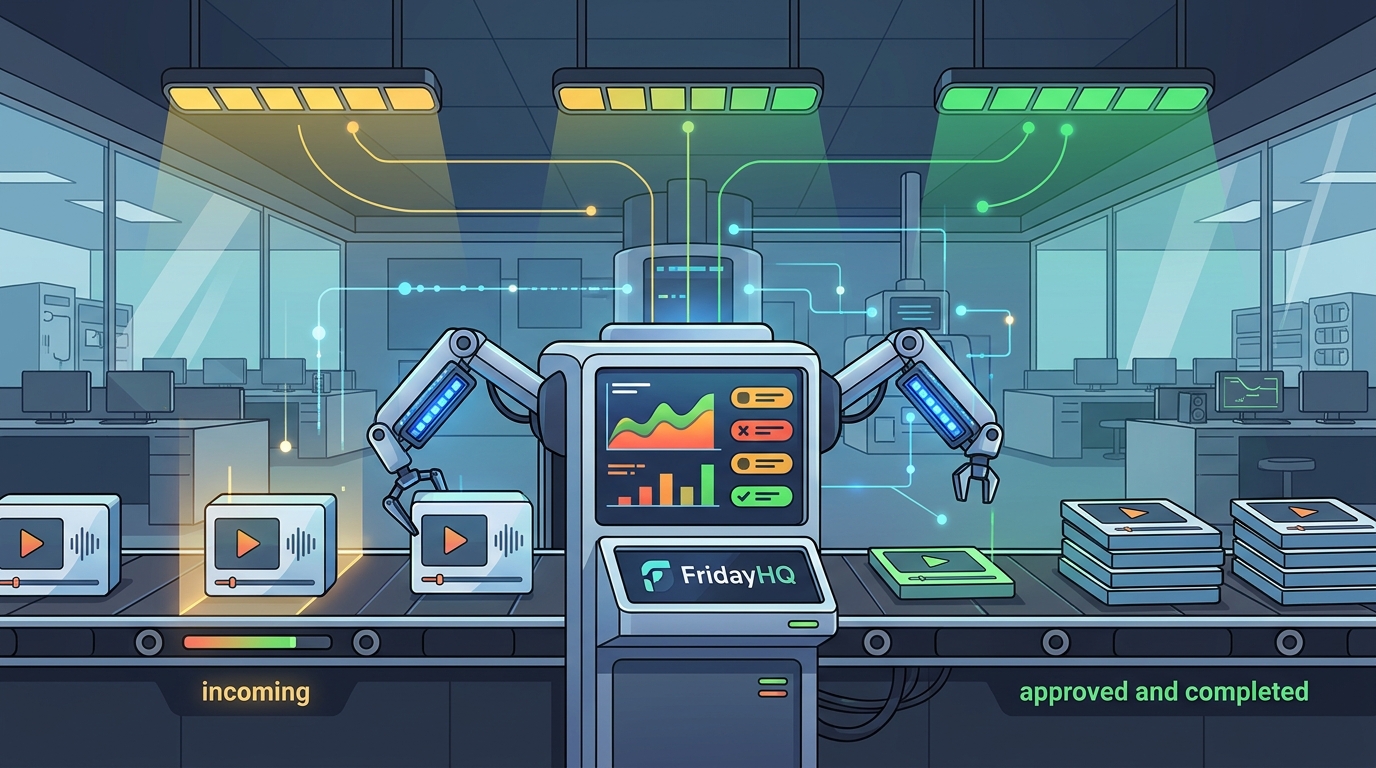
To effectively enforce SLAs, AI must be embedded directly into the tools where the work happens. Standalone AI tools that require manual data entry are often abandoned because they add overhead rather than reducing it. The most effective approach is to use an AI operations partner that lives within the same workspace as the creative assets, conversations, and tasks. This integration allows the AI to understand the context of the work, not just the metadata.
For instance, an AI assistant can read the feedback left on a video frame and determine if the requested changes are minor or major. If the changes are major, it can automatically adjust the estimated completion time for the task. This dynamic adjustment ensures that the SLA remains realistic and achievable. By keeping the AI close to the creative work, teams can maintain a single source of truth for both the content and its operational status.
Building a Culture of Proactive Management
Implementing AI for SLA enforcement is not just about technology; it is about changing how teams think about deadlines. When the system proactively highlights risks, teams are encouraged to address them early rather than hiding them. This transparency fosters a culture of accountability where bottlenecks are seen as systemic issues to be solved, not individual failures to be punished. Over time, this leads to more predictable delivery and higher client satisfaction.
The long-term implication is a shift from reactive management to proactive orchestration. Teams spend less time chasing updates and more time focusing on creative quality. By using AI to handle the operational overhead, media companies can scale their output without sacrificing the speed or reliability that their clients expect. This is the true value of AI in media operations: it frees humans to do the work that only humans can do.
Key Takeaways
- Manual SLA tracking is prone to errors and delays because it relies on human updates.
- AI can detect workflow bottlenecks by analyzing task velocity and stage durations in real-time.
- Automated ownership verification prevents tasks from falling into gaps between team members.
- Integrating AI directly into the creative workspace ensures context-aware monitoring.
- Dynamic SLA adjustments based on feedback complexity keep deadlines realistic.
- Proactive AI alerts foster a culture of transparency and accountability.
- AI reduces operational overhead, allowing teams to focus on creative quality.
Frequently Asked Questions
What is a service level agreement in media production?
A service level agreement (SLA) in media production is a formal commitment to deliver specific assets within a defined timeframe and quality standard. It sets the expectations for turnaround times, revision limits, and approval processes between the media team and the client or internal stakeholders.
How does AI detect a workflow bottleneck?
AI detects a workflow bottleneck by analyzing the time tasks spend in each stage of the production pipeline. If a stage consistently exceeds its historical average duration, the AI flags it as a risk and alerts the relevant team members for intervention.
Can AI automatically reassign tasks to prevent delays?
While AI can suggest reassignments based on team capacity and skill sets, it typically requires human approval to execute the change. This ensures that the reassignment aligns with the team's strategic priorities and individual workloads.
What is the difference between AI monitoring and manual tracking?
AI monitoring is continuous and context-aware, analyzing the actual work and metadata in real-time. Manual tracking is periodic and relies on human input, which can be delayed or inaccurate, leading to a gap between perceived and actual progress.
How does AI handle client feedback in SLA enforcement?
AI analyzes the nature of client feedback to determine if it requires minor tweaks or major revisions. Based on this assessment, it can adjust the estimated completion time for the task, ensuring that the SLA remains achievable and transparent to all parties.
Is AI useful for small media teams?
Yes, AI is particularly useful for small media teams because it provides the operational oversight that larger teams have dedicated project managers for. It helps small teams scale their output without adding significant administrative overhead.
What data does AI need to enforce SLAs effectively?
AI needs access to task metadata, such as creation dates, due dates, and status changes, as well as contextual data like feedback comments and file versions. This combination allows the AI to understand both the operational status and the creative context of the work.
Conclusion
Enforcing service level agreements in media production is no longer a task that can be handled by manual tracking alone. The speed and complexity of modern media workflows require a more intelligent approach. By leveraging AI to monitor progress, verify ownership, and adjust deadlines dynamically, teams can prevent the bottlenecks that typically derail projects. This proactive management ensures that every deliverable meets its timeline, allowing the team to focus on what truly matters: creating high-quality content. For media teams looking to streamline their operations and maintain strict SLAs, adopting an AI-powered workspace is the most effective path forward. FridayHQ provides the integrated platform where AI operations partners work alongside your creative team, ensuring that every project stays on track and every deadline is met.