

AI tools help media companies identify project blockers and clarify task ownership by analyzing workflow data, communication logs, and task statuses in real time. This guide covers how service level agreements, dedicated account management, priority technical support, blocker detection, and task ownership assignment function within a unified media operations platform. We examine how these components work together to keep creative projects moving from brief to final delivery. For additional details, review the Terms of Service FridayHQ.
Service Level Agreements
Service level agreements are formal commitments that define the performance standards a software provider guarantees to its clients. In the context of media operations, these agreements ensure that the platform remains available and responsive during critical production windows. Media companies operate on tight deadlines, where a platform outage or slow response time can delay a launch. A robust service level agreement provides a safety net that protects the production schedule.
Defining Performance Metrics
When evaluating a media operations platform, teams should look for specific metrics within the service level agreement. These typically include uptime guarantees, response times for support tickets, and resolution targets for critical issues. For a media team, the difference between a 99.9% uptime and a 99.99% uptime can mean the difference between meeting a deadline and missing a broadcast slot. Clear metrics allow project managers to hold the vendor accountable and plan their workflows with confidence.
Aligning SLAs with Production Cycles
Dedicated Account Management
Dedicated account management is a service model where a single point of contact oversees the client relationship and ensures the platform is used effectively. For media companies, this is not just about billing or technical issues. It is about understanding the unique workflows of a creative team and helping them adapt the platform to their needs. A dedicated account manager acts as a bridge between the software provider and the media team, ensuring that the tools are working for the people, not the other way around.
The Role of a Media-Savvy Account Manager
Not all account managers are created equal. For a media company, the ideal account manager understands the pressures of creative work. They know the difference between a brief and a final cut, and they understand why a producer might be stressed about a deadline. This domain expertise allows them to provide more than just technical support. They can offer best practices for organizing projects, managing feedback, and coordinating across teams. This level of understanding is critical for maximizing the value of the platform. according to Mapping the Finances
Proactive Guidance and Optimization
A dedicated account manager should be proactive, not reactive. They should regularly review how the team is using the platform and identify opportunities for improvement. This might include suggesting new features that could streamline a workflow or recommending changes to how projects are structured. By providing ongoing guidance, the account manager helps the team get more out of the platform over time. This continuous optimization is a key differentiator between a basic software subscription and a true operational partner.
Priority Technical Support
Priority technical support is a tier of customer service that provides faster response times and access to specialized engineers for critical issues. In a media environment, technical issues can have immediate and significant consequences. If the platform goes down during a review session, the entire team is idle. If a file fails to upload, the client cannot see the latest version. Priority technical support ensures that these issues are resolved quickly, minimizing downtime and keeping the project on track.
Escalation Paths and Response Times
When evaluating priority technical support, teams should look at the specific escalation paths and response times. A clear escalation path ensures that critical issues are routed to the right people quickly. Response times should be defined in minutes, not hours, for critical issues. For example, a critical outage should trigger a response within 15 minutes, while a non-critical issue might have a response time of 4 hours. These specific commitments allow the team to plan for contingencies and manage client expectations.
Access to Specialized Engineers
Priority support should include access to specialized engineers who have deep knowledge of the platform. These engineers can diagnose complex issues that a general support agent might not be able to resolve. For a media company, this means faster resolution of issues that could otherwise stall a project. Access to specialized engineers is a key component of a high-quality support experience and is a critical factor when choosing a media operations platform.
Blocker Detection
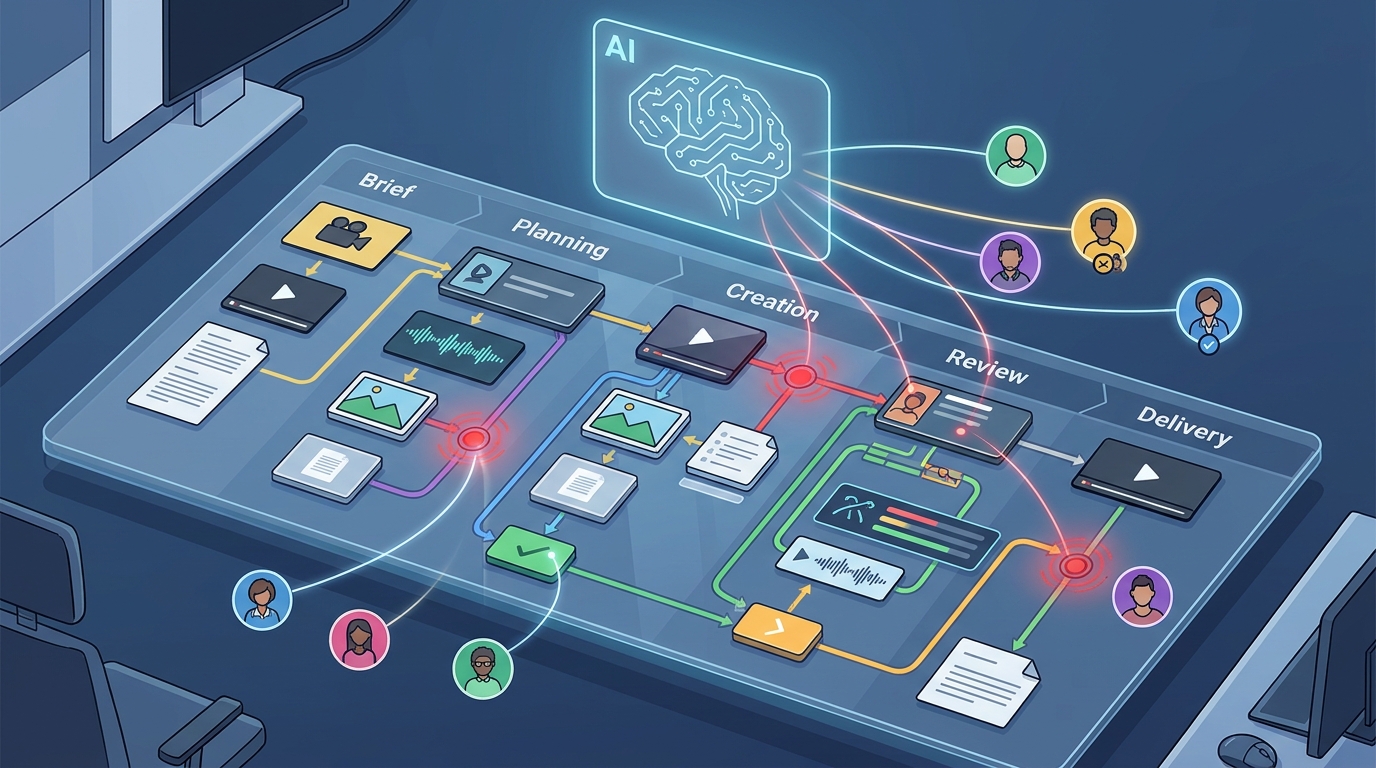
Blocker detection is the process of identifying tasks or projects that are stalled due to missing information, pending approvals, or technical issues. In a media company, blockers are often invisible until they cause a delay. An AI-powered blocker detection system analyzes workflow data to identify these stalls early. This allows project managers to intervene before a small delay becomes a major problem. By proactively identifying blockers, the team can keep projects moving and meet their deadlines.
How AI Identifies Stalled Work
AI systems can identify stalled work by analyzing patterns in task statuses, communication logs, and file activity. For example, if a task has been in "In Progress" status for longer than the average time for that type of task, the AI can flag it as a potential blocker. Similarly, if there has been no communication on a project for a certain period, the AI can flag it for review. These patterns are often invisible to human project managers, who are juggling multiple projects at once. AI provides an objective view of the workflow, highlighting areas that need attention.
Contextual Analysis of Blockers
Effective blocker detection goes beyond simple status flags. It provides context for why a task is stalled. For example, the AI might identify that a task is blocked because a client has not provided feedback on a previous version. This context allows the project manager to take the appropriate action, such as sending a reminder to the client or reassigning the task. By providing context, the AI helps the team resolve blockers more efficiently and effectively.
Task Ownership Assignment
Task ownership assignment is the process of clearly defining who is responsible for each step in a project. In a media company, tasks are often passed between multiple people, from producers to editors to clients. Without clear ownership, tasks can fall through the cracks, leading to delays and missed deadlines. A unified platform ensures that every task has a clear owner, and that the owner is notified when the task is due. This clarity is essential for keeping projects on track.
Automating Ownership Handoffs
AI can automate the process of assigning ownership for the next step in a workflow. For example, when a producer completes a brief, the AI can automatically assign the next task to the editor. This eliminates the need for manual handoffs, which are often a source of confusion and delay. By automating ownership handoffs, the platform ensures that work moves smoothly from one person to the next, without gaps or overlaps.
Tracking Accountability and Progress
Clear task ownership also makes it easier to track accountability and progress. When every task has a clear owner, it is easy to see who is responsible for a delay. This transparency helps the team identify bottlenecks and address them proactively. It also helps clients understand the status of their project, as they can see who is working on each step. This level of transparency builds trust and improves the client relationship.
Key Takeaways
- Dedicated account management ensures that the platform is used effectively and adapted to the unique needs of a media team.
- Priority technical support minimizes downtime by providing fast access to specialized engineers for critical issues.
- AI-powered blocker detection identifies stalled work early by analyzing patterns in task statuses and communication logs.
- Clear task ownership assignment ensures that every step in a project has a responsible owner, preventing delays and confusion.
- Automated ownership handoffs streamline workflows by eliminating manual steps and ensuring work moves smoothly between team members.
- A unified platform that combines these features provides a comprehensive solution for managing media operations and keeping projects on track.
Frequently Asked Questions
What is the most important feature for a media operations platform?
The most important feature is a unified workspace that brings together all the tools a media team needs, including chat, review, tasks, and storage. This eliminates the need to switch between multiple tools, which is a major source of inefficiency and error.
How does AI help with project management in a media company?
AI helps with project management by analyzing workflow data to identify blockers, suggest next steps, and automate routine tasks. This allows project managers to focus on strategic decisions rather than administrative overhead.
What is a service level agreement in the context of software?
Why is dedicated account management important for media teams?
Dedicated account management is important because it provides a single point of contact who understands the unique workflows of a media team. This ensures that the platform is used effectively and that the team gets the support they need.
How can AI detect a blocked project?
AI can detect a blocked project by analyzing patterns in task statuses, communication logs, and file activity. For example, if a task has been in "In Progress" status for longer than the average time, the AI can flag it as a potential blocker.
What is the benefit of automated task ownership assignment?
The benefit of automated task ownership assignment is that it eliminates manual handoffs, which are a common source of confusion and delay. It ensures that work moves smoothly from one person to the next, without gaps or overlaps.
Conclusion
Managing a media company requires more than just creative talent. It requires a robust operational system that can handle the complexity of modern content production. By leveraging AI tools for blocker detection and task ownership assignment, media teams can keep their projects on track and meet their deadlines. Combined with strong service level agreements, dedicated account management, and priority technical support, these tools provide a comprehensive solution for managing media operations. FridayHQ is built for the people behind the world's content, providing a unified workspace that brings people, projects, and communication together. To see how these features work in practice, book a demo and explore how FridayHQ can help your team move from idea to execution with fewer obstacles. according to How public media